Two responses that changed the world.
by Moises Capetillo
W hen we tell the story of Jesus’ birth, it is easy to focus on the miraculous moments: angels, dreams, stars, and prophecies fulfilled. But behind the wonder of heaven touching earth stands something just as powerful: two ordinary people who said yes to God when His plan completely disrupted their lives.
Before Bethlehem, before the manger, before the songs of angels, there was a young woman and a faithful man whose obedience made room for the Son of the Highest to enter the world.
Mary’s surrender
Luke 1 introduces us to Mary in the middle of an ordinary life in an unremarkable town. Then suddenly, heaven interrupts her routine: “Rejoice, highly favored one, the Lord is with you” (v. 28).
The angel Gabriel announces that Mary will conceive by the Holy Spirit and give birth to a Son, whose kingdom will never end. This child will be called the Son of the Highest (vv. 32, 33).
Mary is troubled — and understandably so. She asks an honest question: “How can this be . . . ?” (v. 34).
This is not doubt; it is faith seeking understanding. Mary does not resist God’s plan; she leans into it. And then she speaks words that would echo through salvation history: “Behold the maidservant of the Lord! Let it be to me according to your word” (v. 38).
Mary’s yes was not convenient. It came with risk: social rejection, misunderstanding, and uncertainty. Yet she surrendered her plans to God’s purpose. Her availability became the doorway through which the eternal Son entered time.
Mary teaches us that faith often looks like trusting God without knowing how everything will unfold. She did not have all the answers, but she trusted the One who did.
Joseph’s obedience
If Mary shows us courageous surrender, Joseph shows us obedient strength.
Matthew describes Joseph as a “just man” (1:19). Before any angel appears, we learn something important about his character.
When Joseph discovers Mary is pregnant, his world is shaken. According to the law, he can expose her publicly. Instead, he chooses compassion, resolving to quietly end the engagement.
Then God speaks through His angel: “Joseph, son of David, do not be afraid to take to you Mary your wife, for that which is conceived in her is of the Holy Spirit” (v. 20).
Joseph is given a divine assignment that requires immediate trust. And Scripture records his simple response: “Then Joseph, . . . did as the angel of the Lord commanded him . . .” (v. 24).
No further dialog needed. No recorded words. No debate. Just obedience.
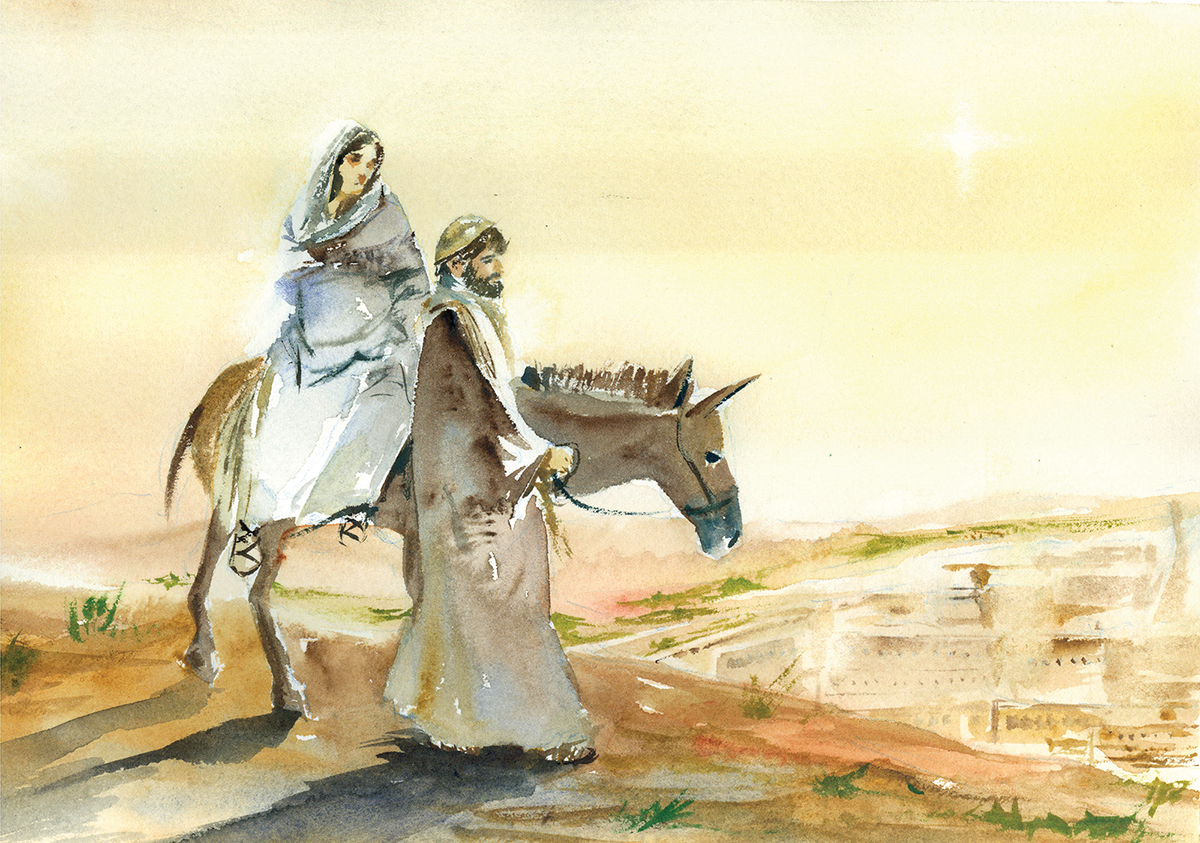
Joseph becomes the quiet protector of God’s promise. He leads Mary to Bethlehem, fulfilling prophecy (Micah 5:2). He shelters his family, flees to Egypt when warned, and later returns to Nazareth. He provides, protects, and models faithfulness — all without standing in the spotlight.
Joseph teaches us that sometimes obedience does not announce itself. Sometimes it listens in the silence and acts in reverence.
Heaven’s plan, human hands
Together, Mary and Joseph remind us that God’s greatest work often begins in ordinary homes. The eternal Son of God entered the world, not through power or prestige but through the surrender and obedience of two servants willing to trust God with their lives.
Mary surrendered her future. Joseph surrendered his reputation. Both trusted God’s word over their circumstances. Jesus, the Son of the Highest, was raised in a home shaped by obedience, humility, and faith.
As we think of Jesus’ early years, we remember babies need to be fed, held, and led. In His wisdom, God didn’t send Jesus into a palace. He sent Him into a yes. A yes you can live in. A yes that changes diapers, makes dinner, works hard, prays often, and stays faithful. Jesus’ earliest years were holiness at home, nurtured under God’s perfect love and raised by parents whose surrender and obedience made room for heaven.
Long before He taught crowds or calmed storms, Jesus watched faith lived out at home in real time.
Our invitation
God may not call us to raise the Messiah, but He still interrupts our lives with divine purpose. Unexpected seasons. Unplanned responsibilities. Assignments that stretch our faith.
Like Mary, we are invited to say, “Let it be to me according to Your word.”
Like Joseph, we are called to obey even when the path is unclear.
Like Immanuel, we are called to live “with God” more than “for God.”
The story of Jesus’ early years reminds us that God accomplishes His eternal purposes through obedient people who are willing to trust Him completely. And sometimes, the most powerful worship we can offer is a simple, faithful yes — just as the yes of the Son of Mary, Son of Joseph, Son of the Highest lived out.